
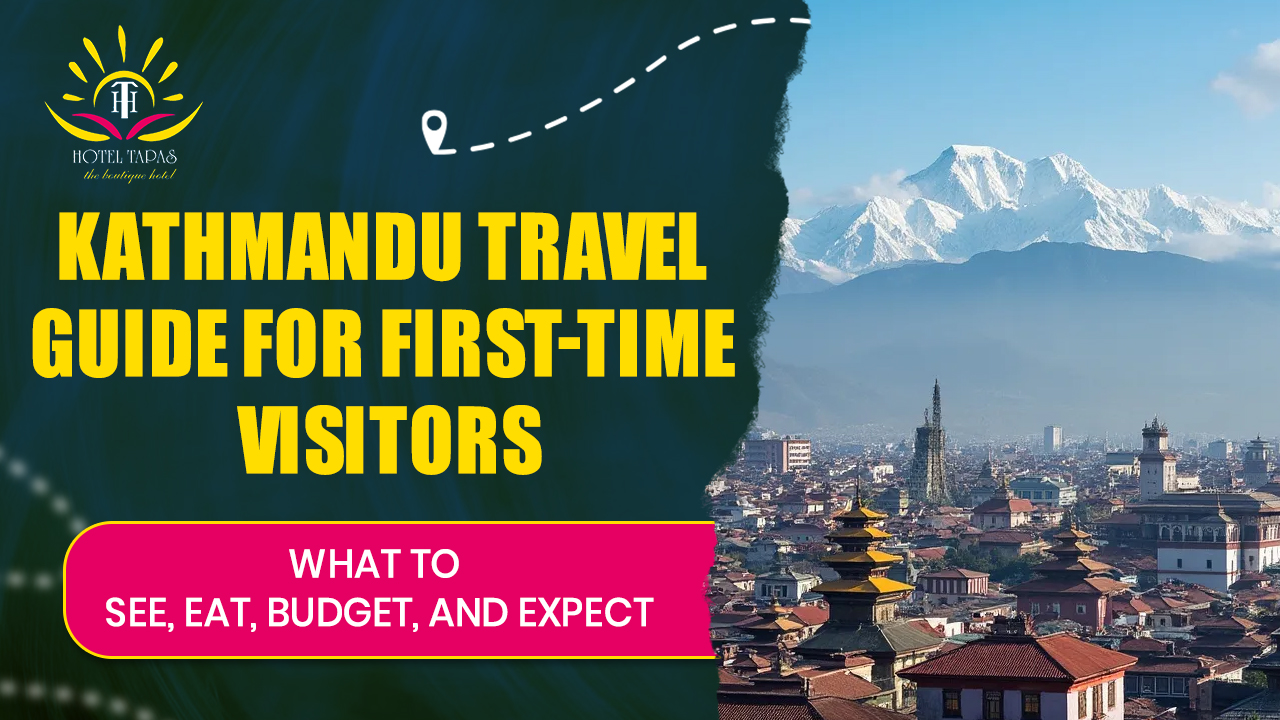
This Kathmandu Travel Guide is built for first-time visitors who want a practical plan not guesswork. Kathmandu can feel like a beautiful sensory overload: temple bells, prayer flags, street food, traffic, courtyards, and craft shops all happening at once. With the right timing and a simple itinerary, you’ll see the highlights (including UNESCO heritage sites), eat well, avoid common scams, and choose a hotel in Kathmandu that matches your style whether you prefer a hotel near Pashupatinath temple, a hotel near airport, or a quieter base hotel around Pashupati for early temple visits.
Nepal’s tourism has continued rebounding strongly, with 1,147,548 visitors in 2024 reported by Nepal Tourism Board (as cited by national media), and over 415,048 visitors in the first four months of 2025 per NTB’s arrival updates so it’s smart to plan ahead for peak seasons.

Kathmandu Travel Guide: Quick facts
Here’s a fast overview you can screenshot.
|
Topic |
Quick info |
|
City elevation |
About 1,400 m above sea level (helps explain cooler nights). |
|
Time zone |
Nepal Time is UTC +5:45 (no daylight saving). |
|
Airport |
Tribhuvan International Airport (KTM / VNKT) is Kathmandu’s main international gateway. |
|
UNESCO “Kathmandu Valley” |
7 monument zones: Kathmandu, Patan, Bhaktapur Durbar Squares; Swayambhu; Boudhanath; Pashupati; Changu Narayan. |
|
Common power plugs |
Type C, D, M; 230V, 50Hz. |
|
Tourist police hotline |
Dial 1144 (toll-free within Nepal). |
Before you land: visa, airport, SIM, money
Visa on arrival (tourist): what most first-timers need
Nepal’s official immigration site lists tourist visa fees (commonly issued on arrival at major entry points):
-
15 days: USD 30
-
30 days: USD 50
-
90 days: USD 125
Rules can change by nationality and policy, so always confirm on the official immigration portal close to travel.
Arriving at Tribhuvan International Airport (KTM)
Tribhuvan International Airport is Kathmandu’s primary airport; CAAN lists its codes KTM (IATA) and VNKT (ICAO).
Arrival tip: keep a pen handy, store your passport/visa receipt safely, and plan your first ride before you exit (prepaid taxi counters can reduce negotiation stress).
SIM + connectivity (quick guidance)
Kathmandu has strong coverage in most central areas. If you buy a SIM, bring your passport and a passport photo (requirements vary by provider and policy).
Money basics (simple + practical)
-
Nepal uses the Nepalese Rupee (NPR).
-
ATMs exist widely in Kathmandu, but carry some cash for small purchases and entry tickets.
Best time to visit Kathmandu (weather + crowds)
Most first-time travelers prefer October–November (clear skies, festival energy) or March–April (warm, dry-ish, great for day trips). Monsoon months (especially July) are lush but wetter.
Timeanddate’s Kathmandu climate averages show:
-
Wettest month: July ~476 mm average precipitation
-
October: much drier (~49 mm)
-
January: cooler nights; August: warmest average month (per their “quick climate info”)
Kathmandu weather cheat sheet (by season)
|
Season |
Months |
What it feels like |
Best for |
|
Peak clear-sky season |
Oct–Nov |
Comfortable days, cool evenings |
Heritage walks, mountain views, festivals |
|
Winter |
Dec–Feb |
Sunny days, chilly mornings/nights |
Temples, cafés, less crowding |
|
Spring |
Mar–Apr |
Pleasant to warm; dust can rise |
City + short hikes; rhododendron trips |
|
Monsoon |
Jun–Sep |
Warm and humid; heavy rain peaks |
Fewer crowds, greener valley, indoor culture |
Pro tip: pack layers even in warm months Kathmandu evenings can feel cooler than expected because of elevation.
How to get around Kathmandu
Kathmandu’s distances look short on maps, but traffic and road conditions can slow you down. For first-timers, these are the easiest options:
1) Walking (best inside heritage zones)
For Durbar Squares, Thamel lanes, and temple courtyards, walking is often faster than a vehicle.
2) Taxis (most convenient)
-
Always confirm whether the driver will use a meter (many won’t for tourists).
-
Agree on a price before you get in if there’s no meter.
3) Local buses/microbuses (cheap, crowded)
They’re budget-friendly but can be confusing for first-time visitors without Nepali language support.
4) Private driver for a day (most efficient for UNESCO loop)
If you want to cover multiple UNESCO sites in one day (Kathmandu + Patan + Bhaktapur), a driver can save time and decision fatigue.
Where to stay: choosing the right area
A smart base makes your first Kathmandu trip smoother. Here are common areas first-time visitors choose, plus who they suit.
|
Area |
Best for |
Why it works |
|
Thamel |
First-timers who want cafés, shops, tour desks |
Walkable, busy, lots of food |
|
Durbar Square / Basantapur edges |
Heritage lovers |
Close to old-city architecture |
|
Boudha |
Calm evenings, Buddhist culture |
Great for stupa walks and rooftops |
|
Battisputali / Gaushala (Pashupati side) |
Early temple visits + airport convenience |
Popular if you want a hotel near Pashupatinath temple and also a hotel near airport |
A factual note for travelers considering the Pashupati airport zone
Hotel Tapas (Battisputali, Gaushala) describes itself as a boutique family hotel within walking distance of Pashupatinath Temple and about 1.5 km from Tribhuvan International Airport, a location many first-time visitors like for short stays and early flights.
(You can use that as a location reference while comparing accommodation options in the area.)
UNESCO highlights + entry fees table
Kathmandu Valley is world-famous for its UNESCO cultural heritage seven monument zones that collectively represent centuries of Newar art, Hindu and Buddhist traditions, and living culture. UNESCO’s listing explicitly includes the three Durbar Squares, the stupas of Swayambhu and Bauddhanath, and the temples of Pashupati and Changu Narayan.
The “first-time” must-see list
-
Pashupatinath Temple area (sacred Hindu complex; non-Hindus typically view from allowed areas)
-
Boudhanath Stupa (evening circuit walk is a favorite)
-
Swayambhunath (Monkey Temple) (sunset views over the valley)
-
Kathmandu Durbar Square (Hanuman Dhoka)
-
Patan Durbar Square (great museum and courtyards)
-
Bhaktapur Durbar Square (best preserved medieval vibes; half-day trip)
-
Changu Narayan (older temple setting; combine with Bhaktapur)
Official entry fees (Kathmandu Valley)
Nepal Tourism Board publishes a detailed table of heritage entry fees, noting that fees can differ by nationality (Nepali / SAARC / third-country), and updates are based on concerned departments.
|
Site (Kathmandu Valley) |
Foreign nationals |
SAARC nationals |
|
Kathmandu Durbar Square (incl. Tribhuvan Museum) |
NPR 1,000 |
NPR 500 |
|
Patan Durbar Square (incl. Patan Museum) |
NPR 1,000 |
NPR 250 |
|
Bhaktapur Durbar Square |
NPR 1,800 or USD 18 |
NPR 500 |
|
Swayambhu Stupa |
NPR 200 |
NPR 50 |
|
Boudha Stupa |
NPR 400 |
NPR 100 |
|
Pashupatinath Temple (per day, per entry) |
NPR 1,000 |
NPR 1,000 |
|
Changu Narayan |
NPR 300 |
NPR 100 |
Tip: Carry small bills for tickets, and keep stubs in some areas and check them inside the monument zone.
Food you should try and how to eat safely
Kathmandu’s food scene is one of the easiest ways to understand the city: Newar cuisine, momo culture, and festival sweets all in one place.
First-timer foods to try
-
Momo (steamed dumplings: veg, chicken, buffalo ask what’s available)
-
Thukpa (noodle soup, great on cool evenings)
-
Newar set (varied plates try with guidance if you’re new)
-
Sel roti (festival ring bread)
-
Chiyaa (Nepali milk tea)
Food safety (simple rules that work)
-
Choose busy stalls or well-reviewed places (high turnover).
-
If you have a sensitive stomach: start with cooked foods and avoid raw salads for the first day or two.
-
Use sealed water bottles when in doubt.
Culture & etiquette: simple do’s and don’ts
Kathmandu is welcoming, but a few small habits earn instant respect:
-
Shoes off in many temple areas and some homes.
-
Walk clockwise around stupas (common practice at Boudha/Swayambhu).
-
Ask before photographing people, sadhus, or rituals.
-
Dress modestly in religious spaces (shoulders covered helps).
-
At Pashupatinath, remember: it’s a living sacred site. Be quiet and observe signage and staff directions.
Safety, common scams, and emergency numbers
Kathmandu is generally navigable for first-time visitors, but like any busy capital, it helps to stay alert.
Common issues (and how to avoid them)
-
Overpriced taxis: agree on fare first or request meter.
-
“Guide” pressure near heritage sites: only hire licensed guides you choose.
-
Pickpocketing in crowds: keep phone/wallet secured, especially in markets and festivals.
-
Temple donation pressure: give only if you want; don’t hand over your wallet.
Emergency contacts you should save
Nepal Police lists these key numbers:
-
Tourist Police hotline: 1144 (toll-free)
-
Police assistance: 100
-
Traffic police assistance: 103
Nepal Tourism Board also publishes emergency contact points (tourist police stations in major tourist areas).
First-time itineraries: 1, 3, and 5 days
1-day Kathmandu starter route (heritage-heavy)
|
Time |
Plan |
|
Morning |
Swayambhunath (views + stupa circuit) |
|
Midday |
Kathmandu Durbar Square + nearby courtyards |
|
Afternoon |
Garden of Dreams or café break |
|
Evening |
Boudhanath sunset walk + dinner nearby |
3-day first-timer plan (balanced)
Day 1: Kathmandu core (Swayambhu + Durbar + Boudha)
Day 2: Pashupatinath area + Patan Durbar Square (museum + craft lanes)
Day 3: Bhaktapur Durbar Square + optional Nagarkot viewpoint
5-day plan (with breathing room)
|
Day |
Focus |
Why it’s good for first-timers |
|
1 |
Old Kathmandu + Thamel orientation |
Easy start, no long drives |
|
2 |
Swayambhu + Boudha |
Two iconic stupas, great photo light |
|
3 |
Pashupatinath + Patan |
Spiritual + cultural depth |
|
4 |
Bhaktapur |
Medieval architecture, pottery squares |
|
5 |
Day hike/viewpoint (Nagarkot or Shivapuri edge) |
Fresh air after city days |
Budget planning: realistic daily costs
Costs vary widely based on accommodation style, shopping, and transport choices. Use this as a planning baseline (not a promise).
|
Style |
Typical daily spend (excluding flights) |
What it includes |
|
Budget |
NPR 3,500–7,000 |
Local meals, simple rooms, some taxis/buses |
|
Mid-range |
NPR 8,000–15,000 |
Comfortable hotel in Kathmandu, private taxis sometimes, mixed dining |
|
Comfortable+ |
NPR 16,000+ |
Premium stays, guided tours, frequent private transport |
A quick “heritage day” cost example
A day visiting 3 UNESCO sites could include:
-
Entry fees (varies by sites chosen; NTB table)
-
Transport (taxi/driver)
-
Food + water
-
Optional guide
Day trips from Kathmandu (easy add-ons)
If you have one extra day, these are popular first-timer choices:
-
Bhaktapur (often half-day to full-day)
-
Nagarkot (sunrise/sunset viewpoint; weather dependent)
-
Changu Narayan (combine with Bhaktapur; UNESCO listing)
-
Patan craft lanes (technically in the valley, but feels like a day trip)
FAQ: Kathmandu Travel Guide
Is Kathmandu good for first-time international travelers?
Yes, especially if you plan your base area, keep a flexible schedule, and do heritage sites early in the day.
What’s the easiest area to stay in?
For pure convenience, many first-timers choose either Thamel (walkability) or the Pashupati/airport side if they want a hotel near Pashupatinath temple and hotel near airport for short stays or early flights.
Do I need to pre-book UNESCO tickets?
Usually no tickets are commonly purchased at entry gates. NTB lists official fee references for major sites
What is the tourist police number in Nepal?
Nepal Police lists 1144 as the tourist police hotline.
When is the weather best?
Many travelers prefer October–November or March–April. Climate averages show monsoon peaks in July and drier conditions in October/November.